Key Takeaways
- A quartz manufacturer produces engineered quartz slabs by binding crushed natural quartz aggregate, resins, and color pigments through industrial compaction, vacuum pressing, and thermal curing processes.
- For B2B importers, distributors, and fabricators, key evaluation criteria include operational capacity, production line flexibility (such as standard 126" × 63" vs. super-jumbo 138" × 79" slab sizes), and specialized technological offerings .
- Market shifts are prioritizing advanced product lines, including Silica-Free Quartz options and Full-Body Printed Quartz that replicate natural quartzite aesthetics .
- Sourcing strategies require evaluating manufacturing origin, trade policy landscape (such as U.S. tariffs and safeguard duties), and the benefits of integrated, direct-from-factory prefabrication .
1. Introduction
Selecting the right supply chain partner requires a clear understanding of what defines an engineered quartz manufacturer. Unlike regional stone fabricators or localized distributors who cut and install finished countertops, an engineered quartz manufacturer operates industrial-scale facilities designed to transform raw mineral aggregates into structural stone slabs .
For United States B2B buyers—including national importers, regional distributors, commercial builders, and large-scale countertop fabricators—sourcing engineered quartz has evolved beyond comparing basic price points . Modern procurement involves analyzing facility output capacity, trade policy compliance, geographic origin advantages, and material advancements like low-silica or silica-free formulations .
This guide outlines the core operations of a quartz slab factory, details essential production technologies, and provides B2B buyers with a practical framework for evaluating manufacturing partners .
2. Core Capabilities of a Quartz Slab Manufacturer
An industrial quartz slab manufacturer handles every step of primary production, converting raw quartz grains and resin binders into calibrated, polished slabs ready for distribution or secondary fabrication .
Raw Material Blending (Quartz + Resin + Pigments)
                     │
                     ▼
  Vacuum Vibro-Compaction & Pressing
                     │
                     ▼
          Thermal Curing Kiln
                     │
                     ▼
  Calibration, Gauging & Polishing
                     │
                     ▼
Quality Inspection & Crate Packaging
Raw Material Preparation and Blending
Engineered quartz typically consists of roughly 88–93% crushed natural quartz crystal combined with polymer resins, additives, and inorganic pigments. The manufacturer formulates these raw materials to achieve precise slab hardness, color consistency, and stain resistance.
Compaction and Thermal Curing
The blended mixture is transferred into slab molds and subjected to intense vacuum pressure and vibro-compaction. This process removes trapped air pockets, creating a non-porous surface structure. The compacted slabs then pass through continuous thermal ovens to cure and harden the resin matrix.
Gauging, Polishing, and Surface Finishing
Once cured, slabs are gauged to precise thickness tolerances (typically 20mm or 30mm) and processed through multi-head polishing lines to achieve polished, honed, or textured surface finishes.
Slab Dimensions and Capacity Scale
Production infrastructure determines a factory's market versatility. High-capacity facilities often operate dedicated lines for standard formats alongside specialized lines for oversized surfaces :
- Standard Slabs: 126" × 63" (3200mm × 1600mm), widely utilized for standard residential kitchen counters and vanities .
- Super-Jumbo Slabs: 138" × 79" (3500mm × 2000mm), engineered to accommodate extra-large kitchen islands and expansive architectural wall cladding with minimal seam placement .
Facilities maintaining high operational capacity—such as multi-line plants capable of producing approximately 2,000,000 square feet per month—provide supply chain stability for large-volume B2B orders .
3. Advanced Material Innovations: Silica-Free and Printed Quartz
As global regulations and consumer preferences shift, advanced quartz slab manufacturers are investing in next-generation material science to serve safety-conscious and design-forward markets .
┌─────────────────────────────────────────────────────────────┐
│                 Modern Material Innovations                 │
├──────────────────────────────┬──────────────────────────────┤
│      Silica-Free Quartz      │  Full-Body Printed Quartz    │
├──────────────────────────────┼──────────────────────────────┤
│ • Zero/Low Crystalline Silica│ • Veining through full depth │
│ • Reduced Fabrication Risk   │ • Natural Quartzite look     │
│ • Regulatory Compliance      │ • Consistent Edge Profiles   │
└──────────────────────────────┴──────────────────────────────┘
Silica-Free Quartz Formulations
Health and safety regulations regarding occupational exposure to respirable crystalline silica (RCS) during countertop fabrication have led to increased demand for safer material alternatives. Forward-looking manufacturers offer Silica-Free Quartz options, replacing traditional crystalline silica with alternative mineral matrices . This development enables fabricators to meet strict safety mandates while maintaining the durability, stain resistance, and mechanical performance expected of traditional engineered stone .
Full-Body Printed Quartz and Quartzite Aesthetics
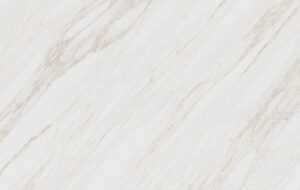
Demand for natural quartzite patterns—characterized by delicate, flowing veining and complex translucency—has driven advancements in digital printing and full-body pattern integration :
- Surface Digital Printing: Applies high-resolution natural stone patterns directly onto the slab surface.
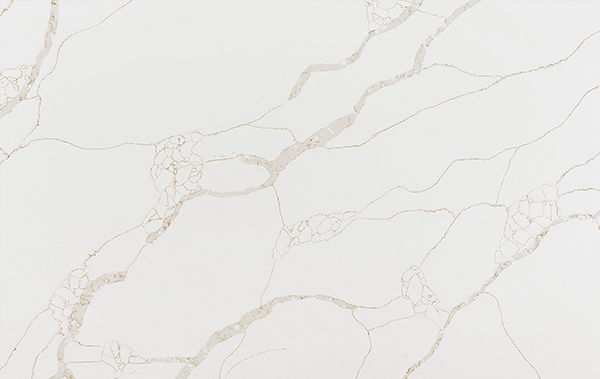
- Full-Body Veining Technology: Distributes pattern pigments throughout the entire thickness of the slab, ensuring that cut edges, mitered borders, and polished sink cutouts match the top surface pattern seamlessly .
Custom OEM / ODM Development
Large brand owners, national distributors, and buying groups frequently require proprietary colors and custom pattern development . An OEM (Original Equipment Manufacturer) / ODM (Original Design Manufacturer) setup allows importers to submit physical control samples or digital targets, which the factory's R&D laboratory replicates through precise pre-production sampling before full container production .
4. Supply Chain Dynamics: Origin, Tariffs, and One-Stop Fabrication
Evaluating a quartz factory involves looking beyond technical specifications to examine global supply chain logistics, trade policies, and integrated value-added services .
                     ┌───────────────────────────┐
                     │ Raw Slab Manufacturing    │
                     └─────────────┬─────────────┘
                                   │
             ┌─────────────────────┴─────────────────────┐
             ▼                                           ▼
┌─────────────────────────┐                 ┌─────────────────────────┐
│ Direct Slab Export      │                 │ In-House Prefabrication │
│ (Containers of Slabs)   │                 │ (Cut-to-Size Projects)  │
└────────────┬────────────┘                 └────────────┬────────────┘
             │                                           │
             ▼                                           ▼
┌─────────────────────────┐                 ┌─────────────────────────┐
│ Distributors / Importers│                 │ Builders / Commercial   │
└─────────────────────────┘                 └─────────────────────────┘
Strategic Manufacturing Origin and Trade Compliance
For United States importers, trade actions such as anti-dumping (AD) and countervailing duties (CVD) have re-shaped global sourcing routes . Sourcing from alternative manufacturing hubs, such as established production bases in Cambodia, provides U.S. buyers with predictable supply options while maintaining rigorous quality control and reliable delivery timelines .
Integrated Fabrication Capabilities
Traditional business models separate slab manufacturing from project fabrication. However, modern supply chain strategies increasingly favor factories equipped with an in-house fabrication workshop . Integrating cut-to-size equipment within the primary manufacturing plant allows B2B buyers to order both bulk slabs and prefabricated project components directly from a single manufacturer :
- Bulk Slab Export: Crate-packed containers shipped to regional stocking distributors .
- Project Prefabrication: Precision cut-to-size countertop kits, complete with edge polishing, sink cutouts, and faucet drilling, designed for direct delivery to commercial multi-family housing, hotel renovations, or residential builder projects .
This integrated approach minimizes material yield loss, eliminates secondary handling costs, and streamlines quality assurance across large construction orders .
5. Decision Matrix: Quartz Manufacturer vs. Intermediary Supplier
When establishing procurement channels, commercial buyers must distinguish between direct manufacturing plants, trading companies, and regional fabricators .
| Criteria | Direct Quartz Slab Manufacturer | Trading Company / Intermediary | Local Fabricator |
|---|---|---|---|
| Primary Business Focus | Industrial slab production & prefabrication | Sourcing & resale brokerage | Custom cutting & local installation |
| Custom OEM/ODM Capabilities | Direct lab color matching & pattern development | Limited to existing supplier catalogs | None (uses pre-made slabs) |
| Slab Format Availability | Full access to Standard & Super-Jumbo formats | Restricted to traded inventory | Dependent on distributor stock |
| Silica-Free Options | Direct factory-formulated product lines | Variable availability | Subject to regional supply |
| Supply Chain Traceability | Full origin documentation & quality control | Mixed origin sourcing risks | Limited to local distributor data |
| Ideal Target Buyer | Importers, distributors, builders, fabricators | Small-batch, varied item buyers | Retail homeowners, local contractors |
6. Frequently Asked Questions (FAQ)
Q1. What is the key difference between a quartz manufacturer and a stone fabricator?
A quartz slab manufacturer produces solid raw engineered stone slabs from crushed quartz, resins, and pigments using large-scale vacuum pressing and curing lines . A stone fabricator purchases finished slabs from distributors or manufacturers, then cuts, shapes, and edge-finishes those slabs into specific countertops for final installation.
Q2. Why are 138" × 79" super-jumbo quartz slabs increasingly specified by B2B buyers?
Super-jumbo slabs (138" × 79" / 3500mm × 2000mm) enable fabricators and builders to design large kitchen islands, commercial reception desks, and full-height wall panels without visible joining seams . This reduces labor costs for cut-and-join work while maximizing visual continuity across high-end architectural surfaces.
Q3. How do OEM / ODM custom quartz services benefit national distributors?
OEM / ODM capabilities allow national or regional distributors to build private-label countertop collections . By collaborating directly with a factory's technical team, distributors can develop exclusive vein patterns, custom base colors, and unique finishes tailored specifically to market trends in their region .
Q4. What advantages does direct prefabrication offer for commercial building projects?
Ordering prefabricated cut-to-size quartz directly from a factory with an in-house fabrication workshop reduces job-site labor, lowers total project material waste, and ensures uniform quality across large multi-unit developments .
7. Conclusion
Choosing an engineered quartz manufacturer is a strategic decision that affects product quality, regulatory compliance, and overall supply chain stability . As the global surfacing market evolves, successful B2B procurement relies on partnering with manufacturers that offer versatile slab dimensions, modern low-silica and silica-free material options, precise OEM/ODM capabilities, and clear trade policy alignment .
For importers, regional distributors, commercial builders, and stone fabricators evaluating long-term manufacturing partners, focusing on industrial infrastructure, direct prefabrication capabilities, and transparent origin compliance provides the most reliable foundation for sustainable growth .