Key Takeaways
- Precision Engineering: Modern engineered quartz slab manufacturing combines approximately 90% to 93% natural quartz aggregates with specialized polymer resins, pigments, and performance additives to achieve dense, non-porous surfaces.
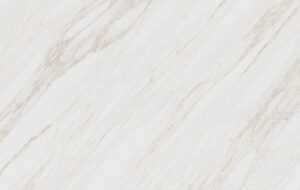
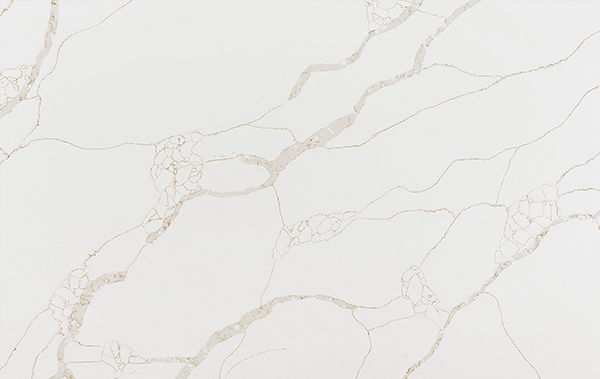
- Advanced Technology Integration: Next-generation manufacturing incorporates Full-Body Printed Quartz technology, enabling intricate veining to extend completely through the slab thickness for authentic edge appearance .
- Format Versatility: Top-tier production facilities produce both traditional slab sizes (such as 126" × 63") and super-jumbo formats (up to 138" × 79") to minimize seams on large commercial or residential installations .
- Supply-Chain Efficiency: Integrating raw slab production with in-house project fabrication simplifies procurement, shortens lead times, and reduces supply-chain risk for U.S. B2B distributors, fabricators, and builders .
1. Introduction
Engineered quartz has become a primary material choice for kitchen countertops, bathroom vanities, wall cladding, and high-traffic commercial spaces. For U.S. importers, stone distributors, fabricators, and project builders, understanding the quartz slab manufacturing process is essential for evaluating material performance, specifying correct slab dimensions, and selecting long-term manufacturing partners .
While natural stone is quarried directly from the earth in solid blocks, engineered quartz is manufactured through a controlled mechanical and chemical process. This industrial process allows manufacturers to deliver material consistency, eliminate internal structural flaws common in natural stone, and introduce advanced aesthetic designs, including marble-inspired veining and full-body aesthetics .
This article provides a comprehensive look inside a modern quartz factory. It covers every step from raw material selection to final slab calibration, explains how innovations like super-jumbo sizing and silica-free options are produced, and demonstrates how an integrated manufacturing approach supports global B2B procurement .
2. The Step-by-Step Quartz Manufacturing Process
The production of high-performance quartz slabs requires strict process controls, automated equipment, and precise formula management. Below is the step-by-step breakdown of how raw minerals are converted into engineered stone slabs.
+-----------------------------------------------------------------------+
| 1. Raw Material Preparation                                           |
|    - Quartz Aggregates (90-93%) + Resin Binders + Color Pigments      |
+-----------------------------------------------------------------------+
                                   |
                                   v
+-----------------------------------------------------------------------+
| 2. Automated Blending & Color Patterning                              |
|    - Uniform distribution & advanced full-body veining placement      |
+-----------------------------------------------------------------------+
                                   |
                                   v
+-----------------------------------------------------------------------+
| 3. Mold Distribution & Vibro-Compression Under Vacuum                 |
|    - High-frequency vibration + high pressure to remove air pockets   |
+-----------------------------------------------------------------------+
                                   |
                                   v
+-----------------------------------------------------------------------+
| 4. Thermosetting Curing                                               |
|    - Temperature-controlled kilns lock resin matrices & density       |
+-----------------------------------------------------------------------+
                                   |
                                   v
+-----------------------------------------------------------------------+
| 5. Cooling, Gauging, Polishing & Quality Inspection                   |
|    - Surface calibration, multi-head polishing, and edge verification |
+-----------------------------------------------------------------------+
Step 1: Raw Material Preparation and Proportioning
The process begins with selecting high-purity natural quartz crystals, which are crushed, washed, and sorted into specific grain distributions ranging from fine powders to coarse granules.
- Matrix Composition: Quartz aggregates make up approximately 90% to 93% of the total mix weight. The remaining percentage consists of unsaturated polyester resins (or alternative organic binders) and color pigments.
- Additives: UV stabilizers, structural additives, or alternative mineral matrices (used in silica-free options) are measured and introduced .
Step 2: Automated Blending and Pattern Development
The raw materials are fed into industrial mixers. Computerized dosage systems ensure that resin-to-aggregate ratios match the engineering specification exactly.
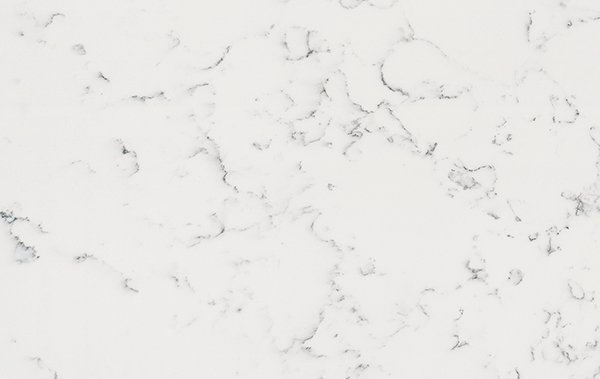
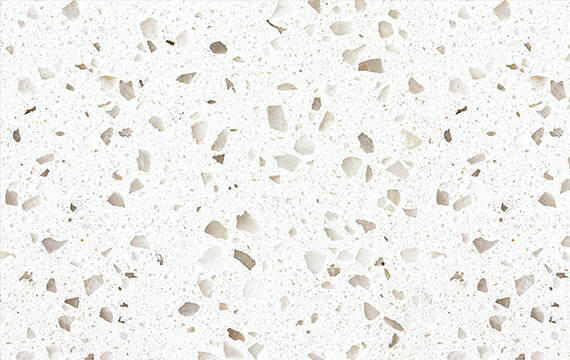
- Monochrome and Micro-Grain Patterns: Material is mixed continuously until pigments and aggregates reach complete homogeneity.
- Veined and Calacatta Patterns: To simulate natural quartzite or marble, separate streams of colored mixtures are combined using specialized distribution heads. Advanced systems use Full-Body Printed Quartz technology to place vein structures three-dimensionally throughout the mixture, ensuring the design passes all the way through the slab core .
Step 3: Mold Distribution and Vibro-Compression
Once mixed, the compound is evenly distributed into large rubber molds configured for specific slab dimensions, such as standard 126" × 63" molds or super-jumbo 138" × 79" molds .
- Vacuum Evacuation: The mold moves into a heavy industrial press chamber where air is entirely evacuated under a strong vacuum.
- Vibro-Compression: High-frequency vibration combined with thousands of kilopascals of hydraulic force compacts the mixture. This step forces out trapped air bubbles and achieves maximum density, yielding a completely non-porous slab structure.
Step 4: Thermosetting Curing
After compression, the raw slab is transferred into a multi-level thermal curing oven.
- Polymerization: Temperatures are maintained between 80°C and 110°C (depending on the resin binder formulation) to initiate cross-linking in the polymer chains.
- Structural Stabilization: Curing permanently hardens the resin matrix around the quartz crystals, imparting high flexural strength, scratch resistance, and liquid impermeability to the finished slab.
Step 5: Cooling, Calibration, Polishing, and Inspection
After exiting the curing kiln, slabs undergo controlled cooling to prevent thermal shock or warping.
- Calibration/Gauging: Diamond-grinding rollers level both top and bottom surfaces, bringing the slab to precise target thickness (e.g., 20mm or 30mm).
- Surface Polishing: A series of progressively finer abrasive heads polish the surface to achieve a high-gloss, honed, or textured finish.
- Quality Inspection: Slabs are inspected under high-intensity lighting for visual defects, color uniformity, dimension tolerances, and flatness.
3. Innovations in Modern Quartz Factories
As demand for sophisticated surfaces grows across U.S. residential and commercial projects, leading quartz factories are expanding their technical capabilities .
+-----------------------------------------------------------------------+
|                    MODERN QUARTZ FACTORY INNOVATIONS                   |
+-----------------------------------------------------------------------+
|  Super-Jumbo Formats   | Full-Body Printed Quartz | Silica-Free Formulations |
|  - Up to 138" x 79"    | - Through-slab veining   | - Health & safety focus |
|  - Fewer island seams  | - Visible on cut edges   | - Evolving compliance   |
+-----------------------------------------------------------------------+
Super-Jumbo Slab Formats (138" × 79")
Standard industry slab sizes (126" × 63") often require visible seams when applied to large kitchen islands, commercial reception desks, or wide wall claddings.
- Modern manufacturing facilities, such as Meritara's factory in Cambodia, operate dedicated production lines for 138" × 79" super-jumbo quartz slabs alongside standard 126" × 63" lines .
- Application Benefit: Super-jumbo slabs allow fabricators to execute expansive island counter tops, waterfall edges, and architectural panels from a single sheet of quartz, eliminating mid-surface seams and reducing material waste during cutting .
Full-Body Printed Quartz Technology
Traditional quartz printing techniques applied visual patterns only to the surface layer of the slab. When fabricators cut sink cutouts or routed decorative edge profiles, the internal plain core was exposed.
- Through-Body Veining: Advanced Full-Body Printed Quartz technology synchronizes surface designs with internal mineral placement .
- Edge Aesthetics: This ensures that vein structures continue through the full slab thickness and remain clearly visible on mitered, bevelled, or bullnose edge profiles .
- Design Matching: High-end design firms and distributors gain a surface that matches the organic look of natural quartzite while offering the stain resistance and structural consistency of engineered stone .
Silica-Free and Alternative Formulations
Due to evolving occupational health and safety standards in global markets, engineered stone factories are developing alternative material formulas.
- Manufacturers offer Silica-Free product options that replace traditional crystalline silica aggregates with recycled glass, mineral silicates, or alternative mineral blends .
- This approach allows distributors and builders to comply with emerging regional regulations while maintaining material strength, heat resistance, and surface durability .
4. Supply Chain Optimization: Bridging Manufacturing and Fabrication
For B2B buyers—including regional distributors, commercial contractors, and national brand partners—buying raw quartz slabs is only part of the supply chain equation . Managing secondary handling, transportation to local fabricators, and project-based cut-to-size processing introduces potential costs and delays.
Traditional Supply Chain:
[ Factory Slabs ] ---> [ Sea Freight ] ---> [ Importer ] ---> [ Local Fabricator ] ---> [ Jobsite ]
* Multiple handoffs, increased freight handling, potential transit damage risk.

Streamlined Integrated Model:
[ Factory Slabs + In-House Fabrication Workshop ] ---> [ Finished Cut-to-Size ] ---> [ Jobsite ]
* Single-source quality control, reduced handling overhead, optimized container load factor .
Integrated In-House Fabrication Workshops
Leading manufacturers address these supply chain risks by incorporating dedicated fabrication workshops within their main manufacturing compounds .
- One-Stop Service: Facilities equipped with automated CNC machinery, bridge saws, and edge polishers can perform cut-to-size fabrication, sink cutout preparation, and pre-prefabrication directly at the factory level .
- Benefits for U.S. B2B Buyers:
- Reduced Handling Costs: Eliminates intermediate transportation and secondary processing steps prior to site installation .
- Consistent Quality Assurance: Factory-level inspection applies to both raw slab structural integrity and finished edge profiling .
- Simplified Procurement: Importers and commercial builders coordinate slab production, custom OEM/ODM matching, and project fabrication through a single manufacturing source .
5. Overview of Quartz Manufacturing Capabilities
The following table summarizes the key operational specifications, slab dimensions, and manufacturing capabilities representative of modern quartz production facilities :
| Operational Parameter / Feature | Technical Specification / Capability Detail | Strategic Buyer Advantage | Evidence Reference |
|---|---|---|---|
| Super-Jumbo Production Lines | 2 dedicated lines for 138" × 79" (3500mm × 2000mm) slabs | Maximizes yield; eliminates seams on extra-large kitchen islands | |
| Standard Production Lines | 1 dedicated line for 126" × 63" (3200mm × 1600mm) slabs | Standardized format for traditional residential countertop layouts | |
| Monthly Capacity | Approx. 2,000,000 sq ft per month (varies by order mix) | Ensures stable volume supply for national distributors & large projects | |
| Aesthetic Capabilities | Full-Body Printed Quartz & custom color/pattern development | Delivers quartzite-inspired through-body veining visible on cut edges | |
| Sustainable Material Options | Silica-Free formulations & specialized aggregate mixtures | Meets evolving regulatory standards and eco-focused architectural specs | |
| OEM / ODM Services | Pre-production sampling & brand-specific color development | Enables importers and brand owners to build proprietary collections | |
| Integrated Processing | In-house fabrication workshop for project cut-to-size | Reduces supply chain complexity and overall procurement costs |
6. Frequently Asked Questions (FAQ)
Q1. What is the main difference between surface-printed quartz and Full-Body Printed Quartz?
Surface-printed quartz applies design patterns only onto the top surface layer of the slab. When the slab is cut or edged, the underlying core material displays a plain, uniform color without veining. Full-Body Printed Quartz technology distributes pigments and vein structures through the complete thickness of the slab, ensuring that veins remain visible on cut edges, mitered drops, and sink cutouts .
Q2. Why are super-jumbo quartz slabs (138" × 79") gaining popularity in B2B procurement?
Super-jumbo slabs accommodate large contemporary kitchen islands, wide vertical wall panels, and commercial surfaces without requiring center seams . For stone fabricators and contractors, larger slab dimensions improve yield per sheet, reduce cutting waste, and lower installation labor on large-scale project sites .
Q3. How do integrated fabrication workshops benefit U.S. distributors and project builders?
An integrated fabrication workshop allows the factory to handle raw slab manufacturing and cut-to-size project processing under one roof . This minimizes logistics steps, lowers risk of shipping damaged raw materials, streamlines quality control, and reduces overall supply-chain management costs for U.S. B2B buyers .
Q4. What are Silica-Free quartz slabs, and why are factories producing them?
Silica-Free quartz slabs utilize alternative mineral binders and recycled materials instead of traditional crystalline silica aggregates . Factories manufacture these options to help overseas distributors, fabricators, and developers comply with regional occupational health standards and environmental building requirements without sacrificing surface hardness or aesthetic appeal .
7. Conclusion
Understanding the modern quartz slab manufacturing process reveals why engineered stone continues to perform strongly across residential and commercial sectors. From high-vacuum vibro-compression that ensures absolute non-porosity to advanced thermal curing kilns that lock in structural integrity, every step is designed for long-term durability.
As technological capabilities progress, factories offering Full-Body Printed Quartz, 138" × 79" super-jumbo formats, and Silica-Free product options give B2B buyers distinct competitive advantages . Furthermore, pairing slab production with in-house cut-to-size fabrication streamlines international supply chains, helping U.S. importers, distributors, and builders deliver high-quality surface solutions efficiently .