Key Takeaways
- Core Role Difference: A quartz manufacturer operates the primary production factory (mixing, pressing, curing, polishing, and slab engineering), whereas a quartz supplier (distributor or importer) manages local inventory, regional logistics, and spot sales.
- Customization & OEM Capabilities: Partnering with a quartz slab manufacturer enables direct custom slab sizes (such as super jumbo slabs), custom aesthetic designs (including Quartzite-Inspired Quartz and Printed Quartz), and OEM/ODM private labeling , .
- Supply Chain Traceability: Direct factory engagement provides full origin traceability and documentation required to comply with U.S. trade policies and tariff frameworks, such as verified Cambodia origin supply chains , .
- Value-Added Fabrication: Advanced quartz manufacturers offer one-stop fabrication and cut-to-size capabilities directly at the facility, reducing handling steps and supply-chain complexity for large project builders and stone fabricators , .
- Selection Strategy: High-volume importers, national distributors, and large commercial project developers benefit most from direct manufacturer partnerships, while small local fabricators requiring immediate single-slab fulfillment may rely on local supplier inventory.
1. Introduction
Selecting the right supply partner for engineered quartz is one of the most critical decisions for U.S. importers, regional distributors, countertop fabricators, and commercial builders . However, the terms quartz manufacturer (or quartz factory) and quartz supplier are frequently used interchangeably in marketing materials, causing operational and procurement confusion.
While both entities deliver quartz slabs to the market, their positions within the global supply chain create fundamental differences in unit costs, customization flexibility, minimum order quantities (MOQs), quality control, and regulatory compliance.
Navigating changing trade policies, safeguard measures, anti-dumping dynamics, and evolving material trends—such as the transition toward Silica-Free Quartz—requires clarity on who actually controls production versus who manages secondary distribution , . This guide provides a detailed operational breakdown of quartz manufacturers versus quartz suppliers, helping B2B procurement leaders optimize their supply chains for long-term stability and profitability .
2. What Is a Quartz Manufacturer?
A quartz manufacturer (or quartz slab manufacturer) is the industrial entity that directly owns and operates manufacturing facilities equipped with industrial mixing systems, high-tonnage heavy presses, curing kilns, and multi-head polishing lines . Manufacturers transform raw materials—silica quartz aggregate, recycled minerals, resin binders, and color pigments—into finished engineered quartz slabs.
[Raw Materials: Quartz Aggregate / Minerals + Resins + Pigments]
                               │
                               ▼
                   [Mixing & Slurry Preparation]
                               │
                               ▼
             [High-Tonnage Vacuum Pressing & Curing]
                               │
                               ▼
            [Slab Calibration, Polishing & Quality QC]
                               │
                               ▼
          [Direct Export / OEM Sourcing / One-Stop Fabrication]
Key Functions of a Quartz Manufacturer
- R&D and Material Engineering: Developing proprietary slab formulations, including low-silica or Silica-Free Quartz, and advancing visual technologies like Full-Body Printed Quartz and Quartzite-Inspired Quartz , .
- OEM / ODM Services: Producing customized slab collections under contract for major international brands, national distributors, and private-label programs .
- Dimensional Scaling: Manufacturing custom slab dimensions, including standard sizes and super jumbo slabs designed to maximize yield and eliminate seams on large island countertops .
- Direct Supply Chain Compliance: Maintaining precise factory-level production records, raw material bills of lading, and certificate-of-origin documentation (such as Cambodia origin validation) to comply with U.S. import regulations , .
- Integrated Fabrication: Certain specialized manufacturers maintain on-site fabrication workshops to offer cut-to-size and prefabrication services directly from the factory floor .
Example: Meritara operates as a dedicated B2B engineered quartz manufacturer geared toward the U.S. market, with official production starting on September 16, 2025, offering raw slab manufacturing alongside project-based prefabrication services .
3. What Is a Quartz Supplier?
A quartz supplier (often operating as a regional quartz distributor, importer, or stone wholesaler) acts as an intermediary merchant within the supply chain. Suppliers purchase finished quartz slabs in bulk container quantities from domestic or overseas factories, handle ocean freight and customs clearance, and store the inventory in domestic regional warehouses.
Key Functions of a Quartz Supplier
- Local Inventory & Warehousing: Storing physical slab inventory across domestic warehouse hubs so local fabricators can inspect and pick up materials on demand.
- Order Volume Flexibility: Allowing countertop fabricators and local contractors to buy single slabs or small quantities without meeting container-load MOQs.
- Regional Logistics: Managing last-mile slab delivery via specialized slab-A-frame flatbed trucks directly to local fabrication shops.
- Immediate Fulfillment: Fulfilling urgent residential or small commercial orders within 24 to 48 hours from existing warehouse stock.
Unlike a manufacturer, a standard supplier does not control raw material mixing, curing temperatures, resin chemistry, or factory-level structural warranties. If a supplier does not own production equipment, they depend on their manufacturing partners to maintain consistent slab calibration, color matching, and physical properties.
4. Key Differentiators: Manufacturer vs. Supplier
Understanding how direct factory partnerships differ from local supplier relationships helps procurement teams evaluate total cost of ownership (TCO) beyond initial slab pricing.
Product Development and Visual Innovation
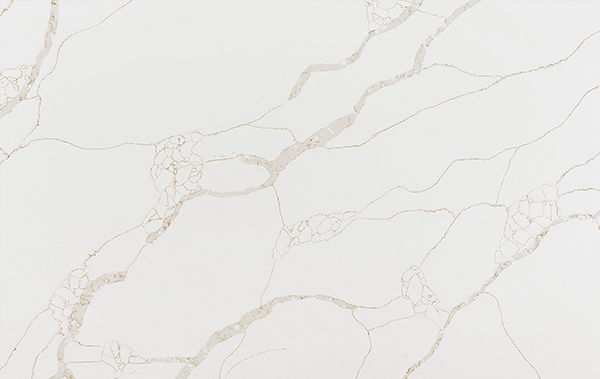
- Manufacturer: Direct access to production machinery allows manufacturers to engineer specific aesthetic patterns—such as Quartzite-Inspired Quartz (engineered slabs replicating natural quartzite aesthetics without claiming to be natural stone) or specialized vein-matched Printed Quartz collections like Calaca .
- Supplier: Limited to selling existing off-the-shelf collections stocked in their distributor catalog. Custom color matching or customized vein alignment is generally unavailable through a standard distributor.
Material Safety and Silica-Free Capability
- Manufacturer: Responsible for fundamental material shifts. As international occupational health standards evolve around respirable crystalline silica (RCS), manufacturers are responsible for engineering alternative mineral formulations, such as Silica-Free Quartz slabs , .
- Supplier: Dependent on their factory sourcing network to provide compliant materials; cannot modify slab formulation or chemical compositions independently.
One-Stop Fabrication and Project Prefabrication
- Manufacturer: Leading factory partners offer integrated one-stop fabrication services , . By combining raw slab pressing with computerized CNC cutting, edge profiling, and cut-to-size sink cutouts under one roof, manufacturers eliminate secondary transportation and handling overhead for high-volume projects .
- Supplier: Typically sells un-fabricated full slabs. Fabricators buying from a supplier must handle all slab cutting, edging, and cutout processing at their local shop.
Cost Dynamics and Regulatory Compliance
- Manufacturer: Sourcing direct from a qualified factory—such as a non-tariff origin manufacturer like a Cambodia quartz manufacturer—offers significant unit cost efficiencies and transparent origin documentation for U.S. buyers , . However, it requires longer lead times (ocean transit) and full container load commitments.
- Supplier: Sourcing from a local supplier includes embedded intermediary markups, storage fees, and domestic freight costs, resulting in a higher price per square foot, but eliminates ocean lead times and import customs complexity.
5. Strategic Comparison: Quartz Manufacturer vs. Quartz Supplier
The following matrix compares structural, operational, and financial parameters across both supply models:
| Feature / Metric | Quartz Manufacturer (Factory) | Quartz Supplier (Distributor / Importer) |
|---|---|---|
| Primary Focus | Slab production, chemical R&D, structural quality control, OEM/ODM , | Local inventory distribution, order fulfillment, regional sales |
| Target Customer | Importers, national/regional distributors, large fabricators, builders | Local countertop fabricators, residential remodelers, small contractors |
| Pricing Model | Factory-direct pricing; reduced unit cost per slab | Wholesale marked-up pricing incorporating logistics and holding overhead |
| Minimum Order Quantity (MOQ) | Container load quantities (typically 1 container / ~70-100 slabs minimum) | Single slab to multi-slab pick-ups |
| Customization & OEM | Full OEM/ODM capabilities; custom slab dimensions, colors, and designs , | Limited to pre-ordered distributor stock catalogs |
| Fabrication Services | Integrated one-stop fabrication and cut-to-size prefabrication available , | Raw slab delivery only; no factory-level fabrication |
| Lead Times | Factory production + ocean freight transit (4–8 weeks depending on origin) | Immediate pickup or 1–3 days local delivery |
| Supply Chain Transparency | Full raw material origin traceability and factory audit support | Limited visibility beyond importer documentation |
| Regulatory Risk Control | Direct compliance management (e.g., U.S. tariff / safeguard policy support, Cambodia origin) , | Dependent on the importer's sourcing compliance |
6. How to Choose the Right Sourcing Model
The optimal sourcing channel depends on your company's scale, project timeline, and procurement capacity:
                  [Evaluate Your Business Model]
                                │
        ┌───────────────────────┴───────────────────────┐
        ▼                                               ▼
[High Volume / Large Project]                [Low Volume / Urgent Spot Need]
  • National/Regional Distributor              • Local Stone Fabricator
  • Large Importer / Brand Owner               • Single Residential Remodel
  • Commercial Builder / Developer             • Small Multi-Family Repair
        │                                               │
        ▼                                               ▼
Partner with a **Quartz Manufacturer**        Partner with a **Quartz Supplier**
  • Direct container-load pricing              • Single-slab availability
  • Full OEM/ODM & custom sizes                • Immediate local pickup
  • Verified origin compliance                 • Zero ocean freight risk
Choose a Quartz Manufacturer If You Are:
- An Importer or Regional Distributor: You possess local warehousing infrastructure, can commit to container-load volumes, and seek higher profit margins alongside proprietary OEM/ODM slab development .
- A Commercial Project Builder or Multi-Family Developer: You require large volumes of uniform cut-to-size countertops with strict color consistency across hundreds of units. Utilizing a factory with one-stop fabrication capabilities streamlines project execution and lowers installation labor costs .
- A Brand Owner Seeking Specific Innovations: You need custom visual lines—such as Full-Body Printed Quartz or Quartzite-Inspired Quartz collections—or specialized technical compliance like Silica-Free Quartz formulas , .
- A Buyer Navigating Tariff Constraints: You require direct supply-chain transparency, verified production audits, and compliant origin sourcing (such as stable manufacturing out of Cambodia) to protect against trade compliance liabilities , .
Choose a Quartz Supplier If You Are:
- A Local Custom Countertop Fabricator: You handle custom residential kitchens, requiring 1 to 3 slabs per project with immediate local delivery.
- Managing Tight Construction Deadlines: Your project requires immediate material replacement within 24–48 hours, where waiting for factory ocean transit is not feasible.
- Working with Cash Flow Constraints: You prefer to order slabs on a project-by-project basis rather than tying up capital in full container shipments and warehouse inventory holding costs.
7. Frequently Asked Questions (FAQ)
Q1. Can a quartz manufacturer also function as a quartz supplier?
Yes. Some large manufacturing operations establish direct regional distribution hubs within key import markets (such as the U.S.) to supply local fabricators directly . Additionally, manufacturers equipped with one-stop fabrication capabilities provide pre-cut project kits directly to commercial builders, combining factory direct manufacturing with supply-chain fulfillment , .
Q2. What is the technical difference between natural quartzite and Quartzite-Inspired Quartz?
Natural quartzite is a metamorphic rock quarried from natural stone deposits. Quartzite-Inspired Quartz refers specifically to engineered quartz slabs manufactured with advanced visual patterns that mimic the natural veining and depth of quartzite . It offers the aesthetic appeal of natural quartzite combined with the non-porous, uniform, and low-maintenance operational properties of engineered quartz stone .
Q3. How does sourcing directly from a quartz factory with one-stop fabrication benefit commercial developers?
Sourcing directly from a manufacturer with integrated fabrication eliminates secondary handling steps . Slabs are pressed, calibrated, and cut to precise project specifications (cut-to-size) directly at the production plant , . This reduces slab waste, lowers total labor expenses, ensures uniform edge finishing across large multi-family or hospitality projects, and simplifies overall project coordination .
Q4. Why is origin traceability critical when choosing an international quartz manufacturer?
U.S. trade policies, safeguard policies, and anti-dumping regulations impose stringent rules on engineered quartz imports . Partnering directly with an established, audited manufacturer—such as a verified Cambodia quartz manufacturer—ensures complete documentation of raw material supply chains, clear origin traceability, and trade compliance, preventing unexpected legal or tariff risks at entry ports , .
8. Conclusion
Understanding the distinct functions of a quartz manufacturer versus a quartz supplier allows procurement teams to structure an efficient, risk-resilient stone supply chain .
- Quartz Suppliers provide indispensable local support, immediate slab availability, and low purchase minimums for local stone fabricators and spot residential jobs.
- Quartz Manufacturers provide the structural foundation for scalable growth, providing low unit production costs, technical capabilities (Silica-Free and Printed Quartz), OEM brand building, direct trade compliance, and integrated one-stop prefabrication services , , .
For U.S. B2B buyers—including importers, national stone distributors, and commercial builders—establishing a direct relationship with a qualified quartz slab manufacturer offers long-term supply stability, reliable product quality, and decisive cost advantages tailored to competitive market demands , .