Key Takeaways
- Super jumbo quartz slabs (such as 138" × 79" or 3200 × 1800 mm) directly eliminate visible joints on wide kitchen islands and continuous commercial counters that exceed standard slab dimensions .
- Larger slab dimensions do not automatically reduce material waste; yield efficiency depends on matching slab geometry to the specific cut sheet layout and multi-piece yield planning.
- Fabrication equipment, transport handling, and slab weight at 20 mm or 30 mm thickness represent primary practical constraints when transitioning from standard to super jumbo formats .
- B2B buyers evaluating super jumbo sourcing must verify factory capabilities, standard minimum order quantities (MOQs), lead times, and available surface finishes .
Introduction
In commercial interior projects and high-end residential kitchen design, seamless quartz surfaces are highly sought after for both aesthetic continuity and hygienic performance. Traditional quartz slab dimensions often require fabricators to join two or more pieces across expansive kitchen islands, waterfall edges, or wide reception desks. This jointing process introduces visible seams, increases shop fabrication labor, and creates potential points of wear over time.
To address these layout challenges, surface manufacturers produce super jumbo quartz slab sizes. However, procurement teams, fabricators, and stone distributors must evaluate whether larger slab formats genuinely optimize material yield or simply shift costs into transport and handling. Selecting the optimal slab dimension requires balancing seam elimination against net material utilization, fabrication shop capabilities, and total project logistics.
Do Super Jumbo Slabs Eliminate Countertop Seams in Large Kitchen Layouts?
Super jumbo quartz slabs successfully eliminate visible seams when project layouts feature continuous spans exceeding standard slab lengths or widths. Standard industry quartz slabs typically measure 126" × 63" (approximately 3200 × 1600 mm) . When a design calls for an oversized kitchen island measuring 130 inches long or 70 inches wide, standard slabs force fabricators to insert a center seam or seam a edge strip.
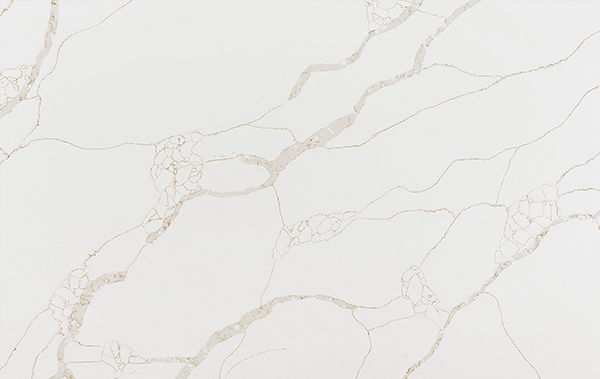
Utilizing super jumbo dimensions, such as 138" × 79" or 3200 × 1800 mm, provides sufficient surface area to cut a full-size island from a single panel . Eliminating seams removes visual disruptions in book-matched or running-vein patterns, such as Calacatta or quartzite-inspired collections . Additionally, seamless surfaces remove epoxy joint lines where dirt and moisture can collect, creating a more durable and hygienic installation for high-use commercial and residential spaces.
However, seamless execution requires absolute dimensional consistency across the slab surface. Fabricators must confirm that super jumbo panels maintain strict thickness tolerances (whether in standard 20 mm or 30 mm profiles) to prevent uneven seams when adjoining perimeter pieces .
Does a Larger Quartz Slab Size Always Reduce Material Waste?
A larger quartz slab format reduces material waste only when the cut plan allows multiple pieces or large single-piece designs to fill the expanded surface footprint efficiently. If a project consists primarily of narrow perimeter counters measuring 25 inches deep, cutting them from a 79-inch-wide super jumbo slab without a secondary yield plan can generate significant offcut scrap .
Net material utilization depends on nesting software calculations and project scale. In multi-unit residential projects or volume commercial programs, super jumbo slabs enable fabricators to nest island tops, backsplashes, and vanity tops onto a single sheet, substantially increasing total square-meter yield. Conversely, for isolated custom runs with smaller dimensions, standard formats like 126" × 63" or 3000 × 1400 mm may achieve a higher utilization percentage with less paid-for scrap .
When evaluating waste reduction, commercial buyers should consider custom cut-to-size options provided by manufacturers for large-scale programs . Sourcing pre-cut panel dimensions directly from the factory can bypass shop yield loss entirely for standardized building projects .
Fabrication, Logistics, and Handling Considerations
Handling and processing super jumbo quartz slabs require specialized shop infrastructure and transport equipment. A standard 30 mm quartz slab already carries substantial weight; expanding slab dimensions to 138" × 79" increases total panel mass proportionally . Fabrication shops must verify that overhead cranes, gantry systems, and CNC bridge saws can accommodate both the increased footprint and the total weight of super jumbo panels.
Transporting oversized slabs introduces additional physical and regulatory constraints. Shipping containers, export frames, and delivery flatbeds must fit extended slab heights and widths without exceeding road clearance limits or structural weight thresholds. If a fabricator lacks specialized vacuum lifters or oversized A-frames, the risk of slab breakage during handling increases, potentially offsetting any material savings achieved through yield optimization.
Furthermore, field installation teams face logistical challenges when maneuvering seamless super jumbo tops into residential buildings. Narrow stairwells, elevator weight caps, and tight hallway turns can prevent the passage of a single 138-inch piece, making pre-installation site access verification essential before committing to a seamless design.
Standard vs. Super Jumbo Quartz Slab Comparison
Choosing between standard, extended, and super jumbo slab formats requires aligning design specifications with available supplier dimensions and fabrication capabilities . The following table summarizes common slab size categories and their primary application fit.
| Format Category | Typical Dimensions | Key Application Fit |
|---|---|---|
| Standard Format | 126" × 63" / 3000 × 1400 mm | Multi-unit apartments, standard vanity tops & general stock programs |
| Extended Format | 2700 × 1800 mm | Mid-sized kitchens & wide vanity banks requiring extra height |
| Super Jumbo Format | 138" × 79" / 3200 × 1800 mm | Oversized seamless islands, waterfall counters & custom projects |
B2B Sourcing, Order Quantities, and Lead Times
When sourcing super jumbo quartz slabs for volume distribution or contract projects, commercial purchasers must verify factory production capabilities and procurement terms . Factory lead times for regular quartz colors typically range between 15 and 25 days, while custom color development, OEM, or ODM programs generally require 20 to 30 days .
Commercial buyers should also account for order volume minimums. Standard factory minimum order quantities (MOQs) are commonly structured around 20 slabs per color or an equivalent surface area of approximately 100 m² . For specialized color lines—such as Calacatta, Carrara, Quartzite-Inspired, Printed Quartz, or Solid Color collections—buyers should confirm that super jumbo press capacity is available for the selected design and thickness .
Before placing container-level orders, buyers should request physical samples to confirm surface aesthetics, vein scale, and finish texture. Manufacturers typically supply small samples (such as 10 × 10 cm) free of charge, with courier freight costs fully refundable upon order confirmation . Full-slab or custom-sized samples can also be arranged for larger commercial design approvals .
Frequently Asked Questions
What dimensions qualify as a super jumbo quartz slab size?
Super jumbo quartz slab sizes generally refer to dimensions equal to or exceeding 138" × 79" (3500 × 2000 mm range) or 3200 × 1800 mm . These dimensions significantly exceed the standard industry benchmark of 126" × 63" (3200 × 1600 mm), allowing full coverage for expansive kitchen islands without structural jointing .
Does using super jumbo quartz slabs reduce overall project installation costs?
Super jumbo slabs can reduce jobsite installation labor by eliminating field-seaming, clamping, and color-matched epoxy blending on large counters. However, these labor savings are often balanced by higher handling requirements, as oversized panels require larger installation crews, specialized transport frames, and careful site access planning.
What standard thicknesses and surface finishes are available for super jumbo quartz slabs?
Super jumbo quartz slabs are predominantly manufactured in standard 20 mm and 30 mm thicknesses, with selected series available in 15 mm or 18 mm subject to structural review . Available surface treatments include Polished, Honed, Leathered, and Matte finishes . Buyers should confirm finish availability for specific collections prior to issuing purchasing orders .
What are the typical commercial order terms when purchasing wholesale quartz slabs?
Wholesale quartz slab sourcing typically requires a standard minimum order quantity of 20 slabs per color or 100 m² . Production lead times generally average 15 to 25 days for standard catalog items and 20 to 30 days for OEM, ODM, or custom color specifications, subject to factory scheduling .
Conclusion
Super jumbo quartz slabs provide a clear technical advantage for projects that demand seamless surfaces across large kitchen islands, reception desks, and continuous architectural cladding . By eliminating joint lines, larger slabs enhance visual pattern continuity and surface hygiene. However, they do not inherently reduce material waste; true yield reduction occurs only when cut plans are carefully optimized or when multi-piece nesting minimizes scrap.
B2B procurement teams, fabricators, and stone importers should evaluate super jumbo format adoption based on shop machinery limits, transportation logistics, and realistic project yields. Prior to placing volume container orders, buyers should verify factory MOQs, production lead times, thickness options, and sample approvals directly with the slab manufacturer .