Key Takeaways
- Strategic Supply Chain Positioning: Cambodia quartz manufacturing offers U.S. importers and distributors a viable alternative source to diversify risk under evolving trade regulations and safeguard measures.
- Strict Verification Rules: Demonstrating authentic Cambodia origin requires verifiable documentation from operational local production facilities, such as Meritara’s manufacturing plant in Kampong Speu Province, which officially opened on September 16, 2025 .
- Risk Mitigation Over Absolute Guarantees: Importers must avoid relying on absolute trade claims like "100% tariff-free" and focus instead on comprehensive, auditable export documentation .
- Material Innovation Standards: Sourcing compliance extends to material safety; specialized offerings such as silica-free and quartzite-inspired quartz should be supported by sample-specific third-party laboratory testing .
1. Introduction
The trade dynamics surrounding engineered quartz surface imports into the United States have undergone continuous structural changes. U.S. distributors, fabricators, and commercial developers face an increasingly complex regulatory framework marked by anti-dumping and countervailing duty (AD/CVD) orders, changing trade preference programs, and potential safeguard measures.
In response, the global quartz manufacturing footprint has shifted toward Southeast Asia. However, U.S. Customs and Border Protection (CBP) and trade authorities have increased scrutiny regarding country-of-origin claims, transshipment risks, and substantial transformation criteria.
Understanding how Cambodia origin impacts U.S. quartz imports under safeguard measures requires analyzing manufacturing reality, legal origin documentation, tariff compliance, and technical product standards. This guide examines the essential compliance protocols, trade policy considerations, and practical criteria U.S. buyers must evaluate when sourcing quartz slabs from Cambodia.
2. Establishing Genuine Cambodia Origin vs. Transshipment Risks
For U.S. importers, the primary compliance objective when importing quartz from Southeast Asia is establishing legitimate country of origin. CBP actively investigates transshipment—the process where goods originating from a restricted country are routed through a third country with minimal or no processing to evade tariffs.
To satisfy U.S. import regulations, quartz slabs must undergo substantial transformation within the declared country of origin. Merely repacking, minor finishing, or transferring raw slabs through a third-country port does not constitute a valid change of origin.
+-----------------------------------------------------------------------+
|                 Authentic Country-of-Origin Pathway                  |
+-----------------------------------------------------------------------+
| Raw Materials & Aggregates -> Mixing, Pressing, Curing & Slab Slicing  |
|      (Fully executed within legal Cambodian entity facility)          |
+-----------------------------------------------------------------------+
                                   |
                                   v
+-----------------------------------------------------------------------+
|                 Auditable Export & Production Records                |
|  - Certificate of Origin (Form D/CO)  - Bill of Lading                |
|  - Utility & Raw Material Logs        - Factory Registration Docs     |
+-----------------------------------------------------------------------+
                                   |
                                   v
+-----------------------------------------------------------------------+
|                      Compliant U.S. Import Entry                      |
+-----------------------------------------------------------------------+
Verification Benchmarks for Importers
Legitimate manufacturing operations are grounded in clear physical capital investments and operational records . For example, Meritara New Material (Cambodia) Co., Ltd established its quartz manufacturing facility in Kampong Speu Province, Cambodia, with an official opening and start of production on September 16, 2025 .
To protect against legal liability under the U.S. Enforce and Protect Act (EAPA), importers must maintain a full audit trail linking factory operations directly to shipping manifests :
- Entity Registration: Verification of the legal Cambodian entity and local industrial licenses .
- Operational Infrastructure: Evidence of active pressing lines, curing kilns, and polishing machinery on-site .
- Raw Material Traceability: Invoices, shipping bills, and consumption logs for raw quartz aggregates, resins, and pigments entering the factory.
- Export Documentation: Precise matching between local production batches, commercial invoices, and outbound bills of lading .
3. Navigating Safeguard Measures and Trade Policy
Safeguard measures and trade policy tools—such as Section 201, Section 301, or temporary emergency tariffs—are designed to protect domestic industries from sudden surges in imports. Because these measures can target specific product categories or countries, U.S. importers must structure their sourcing strategies with long-term policy flexibility in mind.
Sourcing Cost Advantages and Compliance Realities
Cambodia offers structural cost and sourcing benefits for U.S. buyers, supported by competitive operational costs and expanding industrial infrastructure . However, trade regulations are dynamic. Public statements or operational decisions based on permanent exemptions are fundamentally risky .
Importers should adhere to the following risk-management guidelines:
- Avoid Absolute Language: Terms such as "100% tariff-free" or "guaranteed customs clearance" are inaccurate and legally unsupportable . Tariff classifications and duty rates depend on specific Harmonized Tariff Schedule (HTS) codes, active trade rulings, and periodic administrative reviews .
- Maintain Date-Specific Regulatory Tracking: Trade terms and duty exposure must be evaluated against the current U.S. trade policy environment at the exact time of export and entry .
- Document the Commercial Baseline: Work with manufacturers capable of delivering detailed cost calculations, establishing transparent price structures, and maintaining formal compliance protocols .
4. Product Innovation and Technical Material Standards
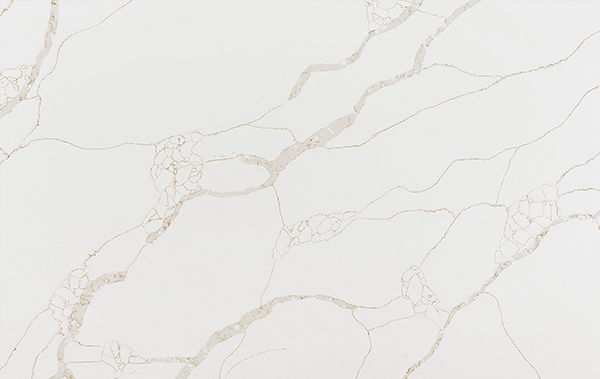
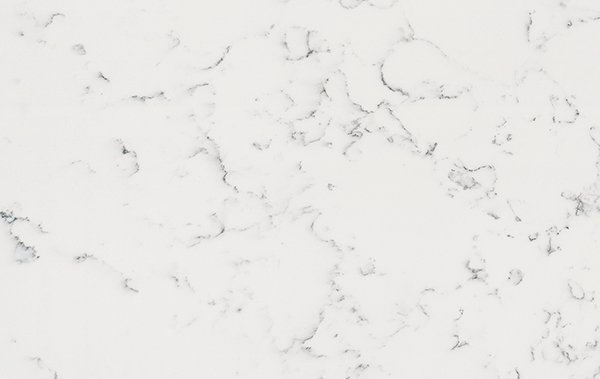
As market demands shift, U.S. importers require more than standard quartz slabs; they need innovative designs and products that address emerging health, safety, and aesthetic standards. Key product categories driving current U.S. demand include printed quartz, quartzite-inspired designs, and alternative material formulations .
+-------------------------------------------------------------------------+
|                  Sourcing Capabilities Framework                       |
+--------------------------------------+----------------------------------+
| Standard & Large Slab Sizes          | OEM / ODM Customization          |
+--------------------------------------+----------------------------------+
| Printed Quartz Aesthetics            | Quartzite-Inspired Patterns      |
+--------------------------------------+----------------------------------+
| One-Stop Fabrication Solutions       | Specialized Formulation Options  |
+--------------------------------------+----------------------------------+
Third-Party Validation for Crystalline Silica Standards
Regulatory bodies and fabrication trade groups in the U.S. and globally are increasingly focused on airborne crystalline silica exposure during fabrication. To meet evolving regulatory expectations and distributor standards, manufacturers are developing specialized material formulations .
Claims regarding material composition must be backed by formal, independent laboratory testing rather than generalized marketing claims .
- Sample-Specific Testing: For example, an SGS composition analysis report issued on April 8, 2026, for Meritara New Material (Cambodia) Co., Ltd evaluated sample MK1001 (Pure White) .
- Verified Findings: The SGS laboratory analysis determined that the characteristic peak of quartz (crystalline silica) was not found in the tested sample .
- Accurate Communication Rules: Industry compliance requires that test results remain sample-specific . A single test report for a specific formulation sample (e.g., MK1001) must not be generalized into absolute claims that every product line contains zero silica .
   [ Compliant Statement ]
   "SGS composition analysis found no characteristic peak of quartz
    (crystalline silica) in the tested sample (MK1001)."

   [ Non-Compliant Statement ]
   "100% silica-free across all factory lines and guaranteed forever."
5. Structured Comparison: Sourcing Risk & Compliance Evaluation
When evaluating a Cambodia-based quartz manufacturer, U.S. buyers should systematically review the operational, documentation, and technical compliance criteria detailed below:
| Evaluation Dimension | High-Risk Sourcing Indicators | Compliant Sourcing Standard (Cambodia) | Strategic Value for U.S. Buyers |
|---|---|---|---|
| Facility Identification | Unclear factory location or virtual-office entity structure. | Verified entity (e.g., Meritara New Material (Cambodia) Co., Ltd) operating in Kampong Speu Province . | Eliminates transshipment claims; establishes physical proof of production . |
| Production Timeline | Inability to provide proof of factory commissioning or equipment logs. | Documented opening date (e.g., September 16, 2025) backed by production records . | Validates genuine manufacturing history against entry timelines . |
| Trade & Tariff Claims | Vendor promises "100% tariff-free" entry or guaranteed clearance . | Vendor provides formal documentation, date-specific policy references, and transparent pricing . | Protects importer from sudden EAPA penalties or duty back-assessments . |
| Material Quality Testing | Generic or non-traceable in-house quality certificates. | Independent third-party testing (e.g., SGS testing for specific samples like MK1001) . | Verifies technical composition claims with auditable evidence . |
| Product Versatility | Limited standard slab options only. | Multi-category support: Printed quartz, quartzite-inspired designs, custom OEM/ODM, slab size options . | Supports broader distribution coverage and design flexibility . |
6. Frequently Asked Questions (FAQ)
Q1. How does establishing country of origin in Cambodia protect U.S. quartz importers from transshipment penalties?
Legitimate country-of-origin status requires that quartz slabs undergo full manufacturing—from raw material batching and mixing to pressing, curing, and finishing—within Cambodia. Operating with a fully documented Cambodian entity, such as Meritara New Material (Cambodia) Co., Ltd in Kampong Speu Province , ensures that the production process meets U.S. Customs standards for substantial transformation. This documented operational history provides the factual foundation needed to defeat transshipment allegations during trade audits .
Q2. Can a quartz supplier guarantee that shipments from Cambodia are 100% free from U.S. safeguard tariffs?
No. Supplier claims of "100% tariff-free" access or guaranteed customs clearance should be avoided . Tariff schedules, safeguard policies, and trade remedy measures are subject to government updates and specific product classification rules under the Harmonized Tariff Schedule (HTS) . Responsible compliance requires evaluating duty obligations based on official export documentation, current regulatory updates, and formal customs entries rather than sweeping guarantees .
Q3. What documentation is required to support low-silica or alternative quartz composition claims?
Composition claims must be supported by formal, third-party laboratory analysis reports for specific product samples . For instance, an SGS composition report issued on April 8, 2026, for Meritara sample MK1001 (Pure White) verified that no characteristic peak of quartz (crystalline silica) was detected in the tested sample . Importers should ensure test reports are sample-specific and avoid unsupportable claims that extend single lab tests to an entire product catalog .
7. Conclusion
Navigating U.S. quartz imports under dynamic trade conditions and potential safeguard measures requires a strategic emphasis on regulatory compliance, operational transparency, and product verification. Sourcing from Cambodia provides U.S. distributors and importers with a strong commercial foundation, provided the supply chain rests on genuine local manufacturing.
To build a resilient import strategy:
- Verify the supplier's physical operational footprint, local legal status, and actual production start date .
- Require comprehensive, audit-ready export and manufacturing documentation for every shipment .
- Reject exaggerated trade claims in favor of date-specific tariff evaluations and formal customs filings .
- Insist on clear, sample-specific third-party laboratory reports to back technical composition and material safety claims .
By aligning import workflows with verifiable origin facts and structured technical compliance, U.S. quartz buyers can successfully manage risk while maintaining competitive market access.